
Khalwat Books
The Books section of Khalwat – Center for Philosophy & Spirituality showcases original publications that explore philosophy, spirituality, ethics, consciousness, psychology, and related interdisciplinary fields. Our books aim to bridge classical wisdom with contemporary thought, making complex ideas accessible to students, researchers, educators, and general readers.
Through scholarly works, translations, edited volumes, and research-based publications, Khalwat seeks to promote critical thinking, intellectual inquiry, and meaningful dialogue. New titles will be added regularly as part of our commitment to advancing knowledge and lifelong learning.
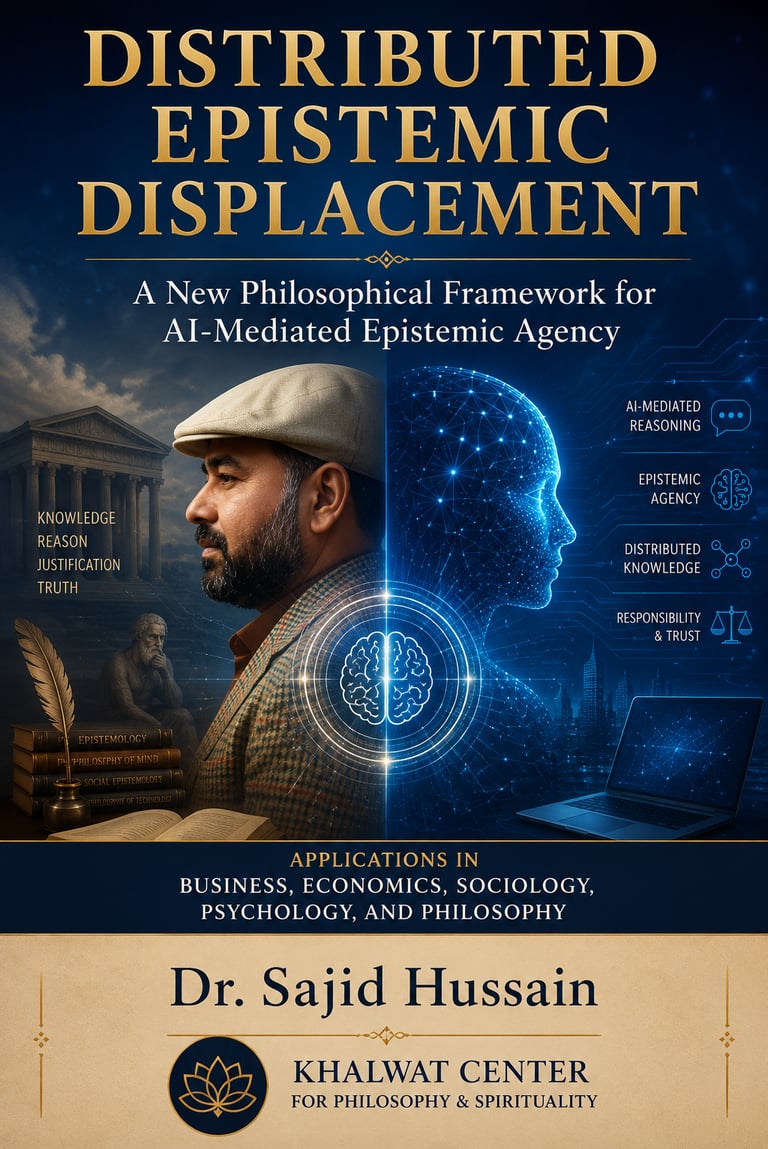
DISTRIBUTED EPISTEMIC DISPLACEMENT (DED)
A New Philosophical Framework for AI-Mediated Epistemic Agency. Applications in Business, Economics, Sociology, Psychology, and Philosophy
About the Book
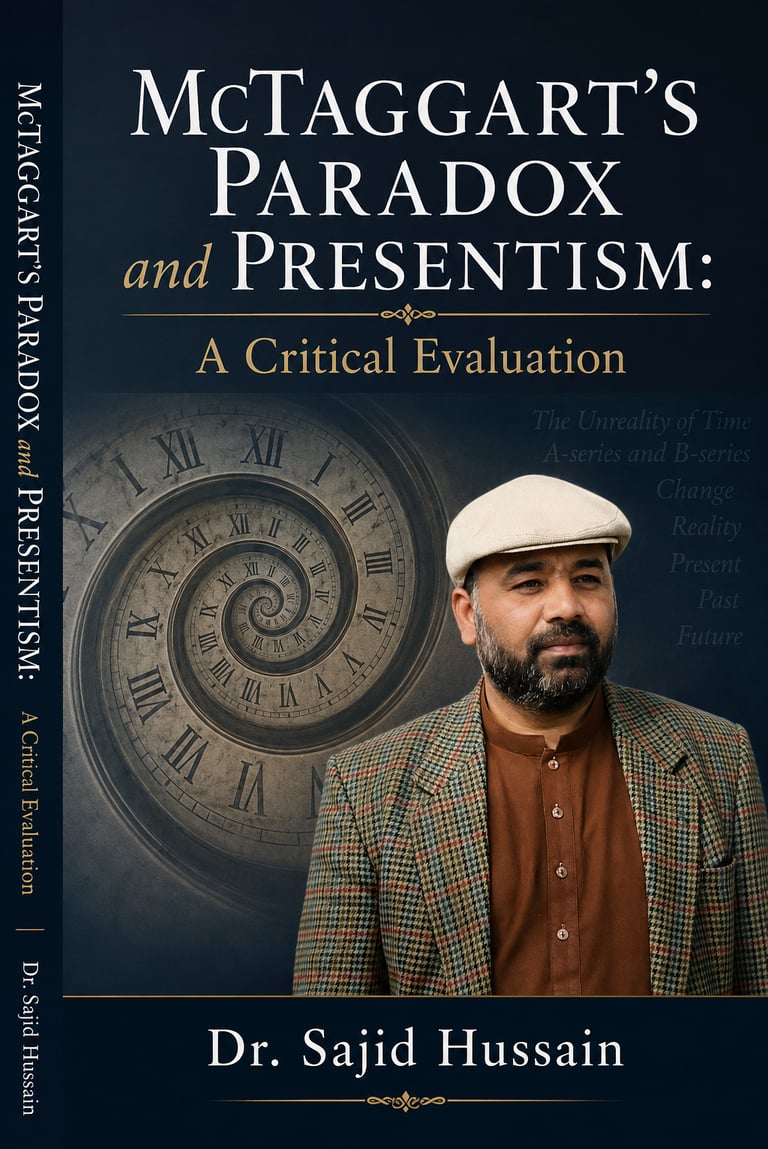
McTaggart's Paradox and Presentism: A Critical Evaluation examines one of the most influential debates in the philosophy of time: whether time is real or an illusion. The book critically analyzes J. M. E. McTaggart's famous argument for the unreality of time, focusing on his A-series and B-series distinction, and evaluates its philosophical implications. Drawing on the theory of Presentism, the work argues that the present moment possesses a unique ontological and phenomenological status, making time a genuine feature of reality. Combining metaphysical analysis with insights from consciousness and temporal experience, this book offers a comprehensive and accessible study for students, researchers, and anyone interested in the philosophy of time.
McTaggart's Paradox and Presentism: A Critical Evaluation
A Philosophical Inquiry into the Nature of Time
About the Book
Distributed Epistemic Displacement (DED): Rethinking Knowledge in the Age of Artificial Intelligence introduces a groundbreaking philosophical framework for understanding how artificial intelligence is transforming human knowledge. As Large Language Models increasingly shape reasoning, decision-making, and belief formation, the book argues that epistemic agency is gradually shifting from individuals to human–AI systems.
By developing the concept of Distributed Epistemic Displacement (DED), the book examines the implications of AI for epistemology, ethics, and intellectual responsibility. It also explores the impact of DED across business, economics, sociology, psychology, and philosophy, while proposing Philosophy of Algorithmic Agency as a new field of philosophical inquiry. This work is intended for researchers, students, and anyone interested in the future of knowledge in the age of AI.